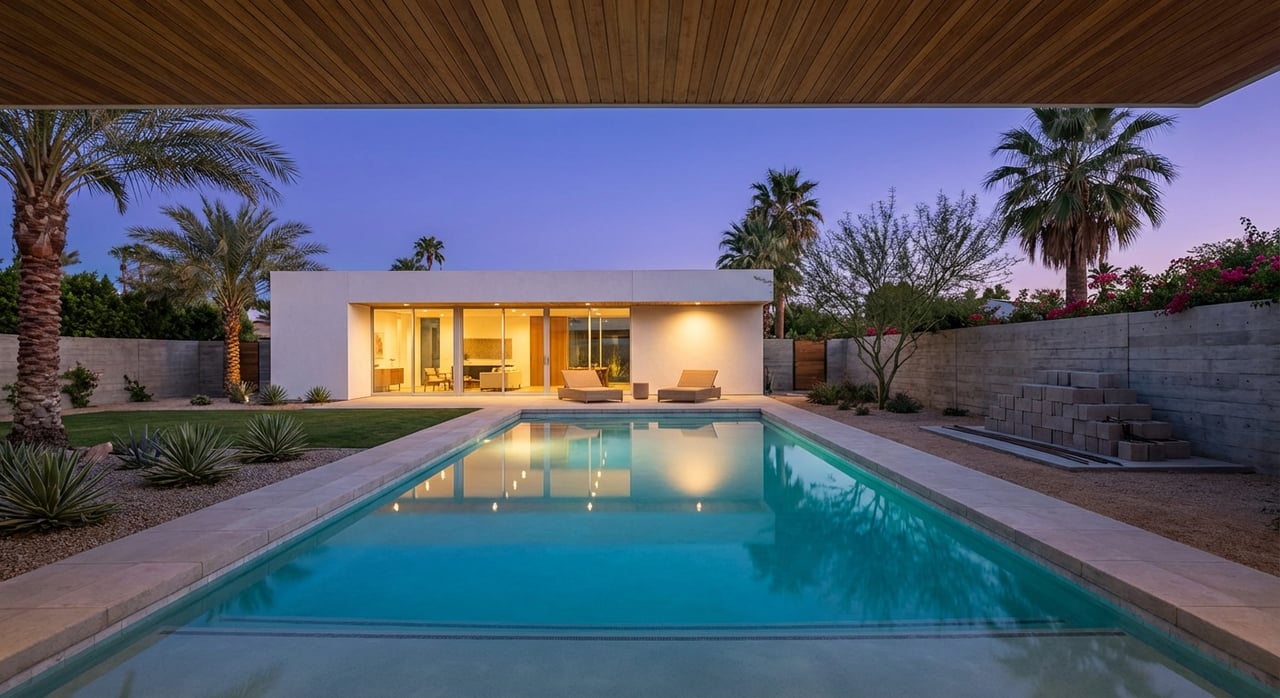
Eyeing The Madison Club and torn between buying a finished estate or building a custom home? You want the right golf lifestyle, mountain views, and a property that fits how you live, without wasting time or overspending. In this guide, you’ll learn the real timelines, cost factors, and resale trade-offs for both paths, plus how to set up a smooth process from offer to move-in. Let’s dive in.
Madison Club at a glance
The Madison Club is a private Discovery Land Company community in La Quinta with a Tom Fazio–designed golf course, a members’ clubhouse, and wellness amenities. You can learn more about the community’s identity from the developer’s page for the club at Discovery Land Company.
The community offers villas, clubhouse suites, and custom estate homesites. Official listings show homesites generally around 0.50 to 1.5 acres, with current asking prices on the club site ranging about $4.85M to $17.95M. You can review active offerings on the club’s official homesites page.
Membership is limited and follows a limited equity model. Public sources commonly cite estimates around $250k to $500k for initiation and $70k+ for annual dues. Treat these as estimates only. Confirm current membership policies and exact figures with club administration, as they can change. For context, see an independent club summary.
Buying a completed home: what to expect
Speed and certainty
If you want to be in-residence soon, buying a finished home is usually the fastest path. You can inspect quality, confirm systems, and close on a predictable timeline. Cash buyers often move fastest. Financed purchases still tend to be measured in weeks rather than many months.
Cost profile and carrying
Your up-front costs are the purchase price plus standard closing costs. Ongoing costs include property taxes, HOA or association dues, and club dues if applicable. California’s property tax base is about 1 percent of assessed value, and Riverside County’s effective rates are often cited near 1.1 percent. Actual bills vary by tax rate area. You can find guidance and FAQs on the county site at the Riverside County Assessor.
HOA fees vary by product type, such as villas versus estate lots. Review each listing and title package to verify dues, any capital contributions, and whether there are special assessments.
Pros and cons when buying
- Pros: Immediate or near-term occupancy, a known product, and a simpler financing path on an existing home. You can validate quality before you close.
- Cons: Limited ability to change layout without a significant remodel. Turnkey homes and trophy views may carry a premium. Top-tier lots often sell privately, which can mean low on-market inventory.
Resale positioning if you buy
Turnkey, high-quality homes tend to show well to the Madison Club buyer pool. If you make updates, focus on neutral, elevated finishes and timeless spatial planning. Highly niche features may limit future appeal. Luxury trade press often highlights how professional presentation and targeted outreach support premium results. For more on how presentation can influence outcomes, see this perspective from Mansion Global.
Building a custom home: what to expect
Start with the site
If you plan to build, you will typically secure a homesite first. The club’s official page lists current lots and prices, which makes it easier to shortlist by orientation and acreage. Review active offerings on the club’s homesites page.
Timeline from design to move-in
For luxury custom builds, a common planning range is 12 to 24 months from design through completion. Complex, large estates can extend toward 18 to 30 months. This includes design iterations, material lead times, and permit cycles. See this overview on sequencing from AmeriSave’s construction loan guide.
In La Quinta, you will coordinate with the city’s plan-check and permit process. Your architect will bundle architectural, structural, civil, and landscape plans for review. Build time can depend on how quickly your team moves through plan-check and revisions. You can explore city resources at the City of La Quinta.
Cost ranges and what drives them
Luxury custom construction costs in Southern California vary widely by program and finish level. A conservative planning range is $400 to $1,000+ per square foot for the build. Complex amenities like theaters, large car galleries, expansive hardscape, and specialty systems can move you above that band. Use the range as a planning input only, and confirm with detailed bids from local, high-end builders. This overview from Construct Elements outlines why costs vary.
Financing and carrying while you build
Construction financing usually charges interest-only on drawn funds and is often priced higher than a permanent mortgage. You should model the draw schedule, interest reserve, lender fees, and conversion to permanent financing. Read a clear overview from LendingTree.
During the build you will also carry property taxes, HOA dues, insurance such as builder’s risk, utilities and site security, plus any builder deposits. Keep in mind that assessed value will adjust when the home is complete. The Riverside County Assessor provides background on how assessments work.
Pros and cons when building
- Pros: Full design control. You can place the home for view and privacy, specify modern systems, optimize indoor-outdoor flow, and program luxury amenities like wellness spaces, courts, or collector garages.
- Cons: More time before you move in. Higher near-term carrying costs. Exposure to cost shifts and delays. Strong personalization can affect future marketability.
Resale positioning for new custom builds
High-quality, contemporary estates with timeless planning tend to perform well in the trophy market. To protect future appeal, many owners favor neutral material palettes, flexible spaces, and infrastructure for optional uses. You can review broader market insights about how quality and presentation affect outcomes in luxury segments via Mansion Global.
Buy vs. build: a clear comparison
When buying often wins
- You want to enjoy the club this season. Speed to occupancy matters most.
- You prefer a known product and predictable closing timeline.
- You value simplicity in financing and wish to avoid construction oversight.
When building often wins
- You have a specific program or lifestyle goal that does not exist in current inventory.
- You want full control over materials, systems, and spatial planning.
- You see long-term value in a custom estate on a specific orientation or view corridor.
Key trade-offs to model
- Time: Weeks to close on a resale home versus 12 to 24 months or more for a custom build.
- Capital and carrying: Purchase price and standard holding costs when buying versus construction loan interest, taxes, dues, insurance, and owner’s rep fees while building.
- Flexibility: Limited structural changes on a resale home versus full design control when you build.
- Resale: Neutral, high-end design tends to widen future buyer appeal. Ultra-niche features can narrow it.
Your smartest next steps
- Confirm membership: Request current membership transfer rules, initiation, and dues directly from club administration or the Discovery Land real estate office. Start with the developer’s club page.
- Validate inventory: Review official homesites and any suitable on-market properties. Ask your advisor to source private opportunities that match your orientation and acreage goals.
- Assemble the team early: For a custom build, interview a local architect and general contractor who have delivered high-end desert estates. Firms with gated-community experience understand design review and local constraints. Explore the type of portfolio you want to see by browsing an example of Madison Club work from a regional architect like BAR Architects & Interiors.
- Plan the path: If buying, pre-underwrite or confirm proof of funds to move fast. If building, model a full 18 to 24-month schedule with contingencies for time and cost.
- Model the numbers: Include construction loan pricing, interest-only draws, tax and dues, and insurance during the build. See an overview from LendingTree and county tax basics at the Riverside County Assessor.
Ready to compare specific Madison Club options side by side? Request a private, data-backed consultation and curated property shortlists from LBG Luxury Homes. You will get discreet guidance, clear timelines, and a plan that fits your lifestyle and investment goals.
FAQs
What makes The Madison Club different from other La Quinta clubs?
- It is a Discovery Land Company residential club with a Tom Fazio–designed course, a private clubhouse, and wellness amenities, which you can review on the developer’s club page.
How much do Madison Club homesites cost today?
- The official club site shows active homesites with asking prices currently around $4.85M to $17.95M; see the Madison Club homesites page.
How long does a custom build at Madison Club usually take?
- Plan for 12 to 24 months from design through completion, with complex estates extending longer; see this sequencing overview from AmeriSave.
What are typical luxury build costs in the area?
- A planning range of $400 to $1,000+ per square foot is common for high-end custom homes, with complex programs costing more; see context from Construct Elements.
What should I know about property taxes and dues when buying or building?
- Budget for California property taxes near 1 percent of assessed value, plus HOA and club dues if applicable; tax FAQs are available from the Riverside County Assessor.