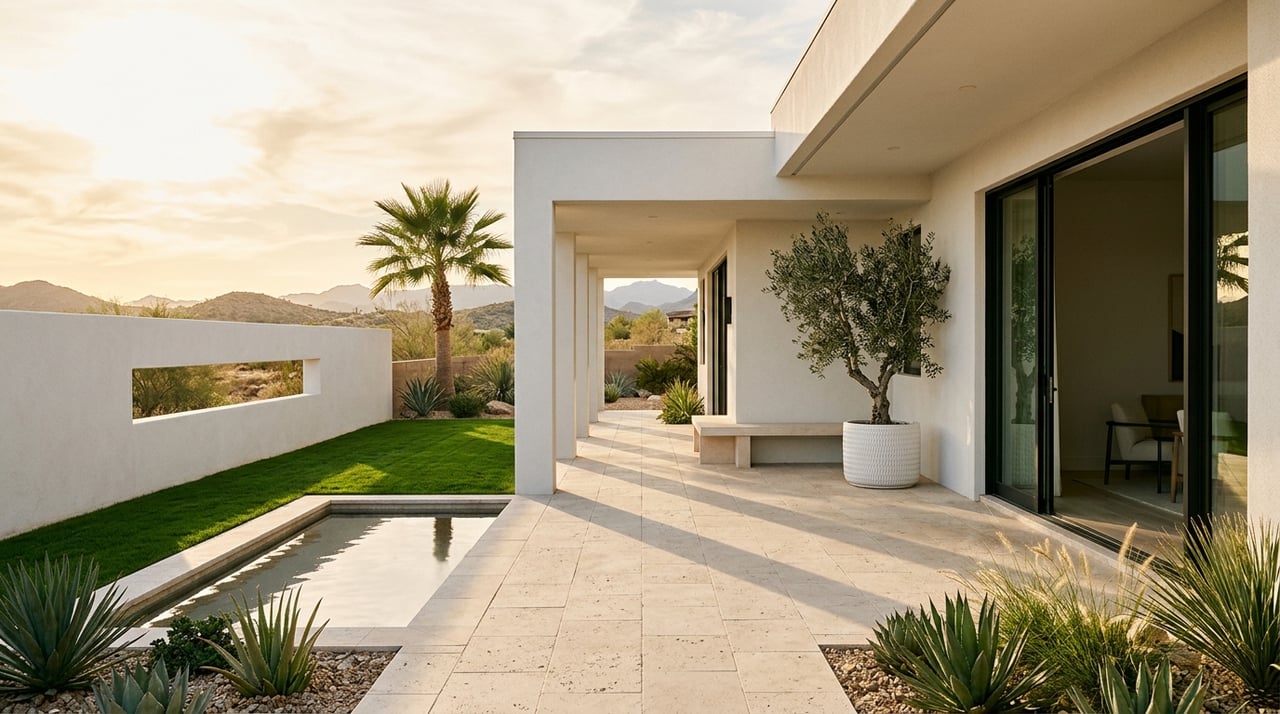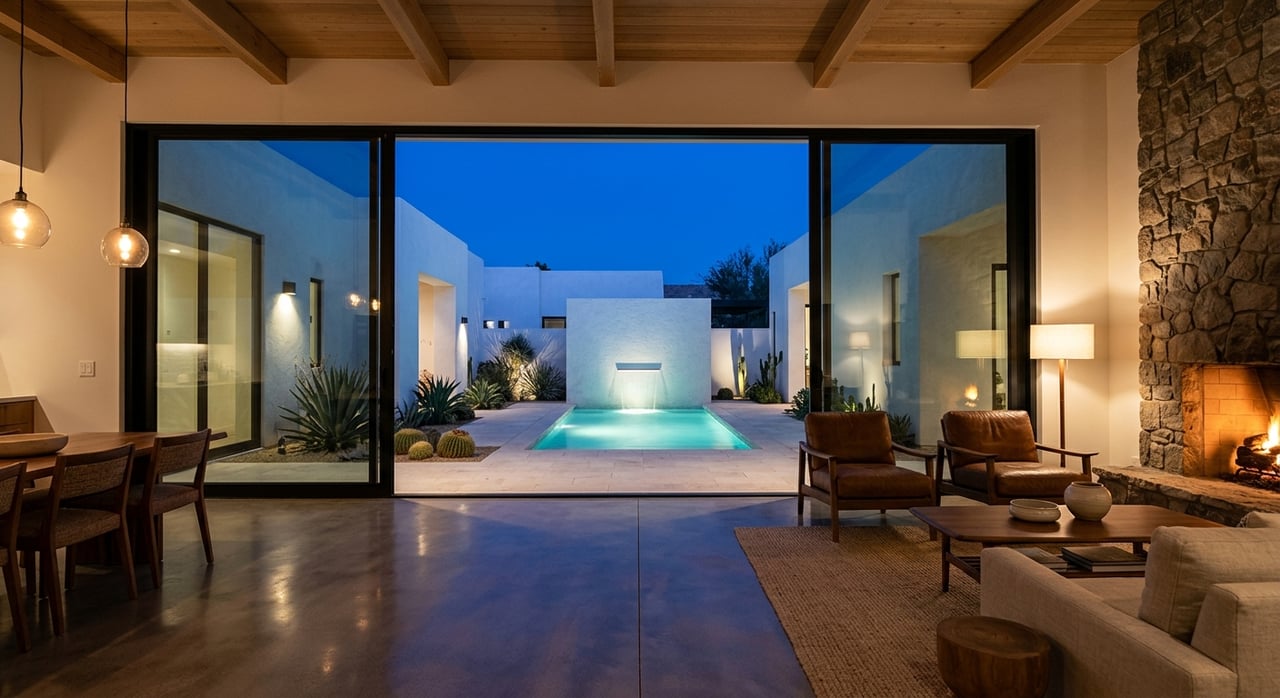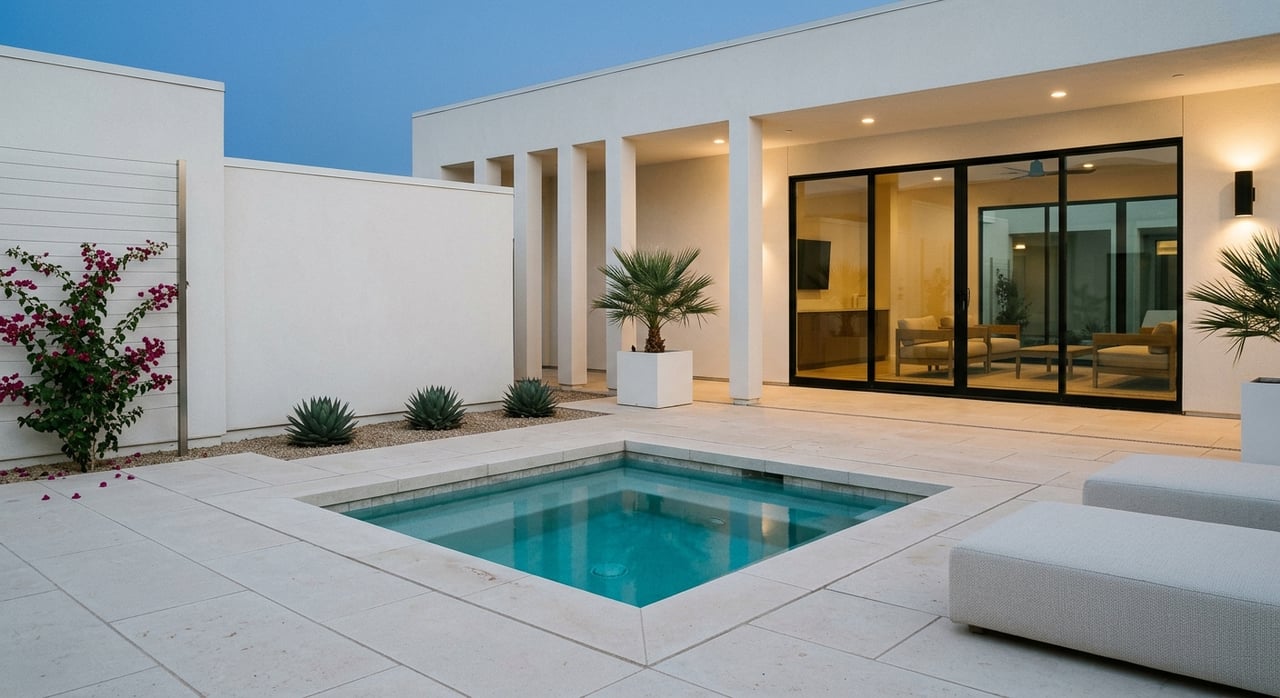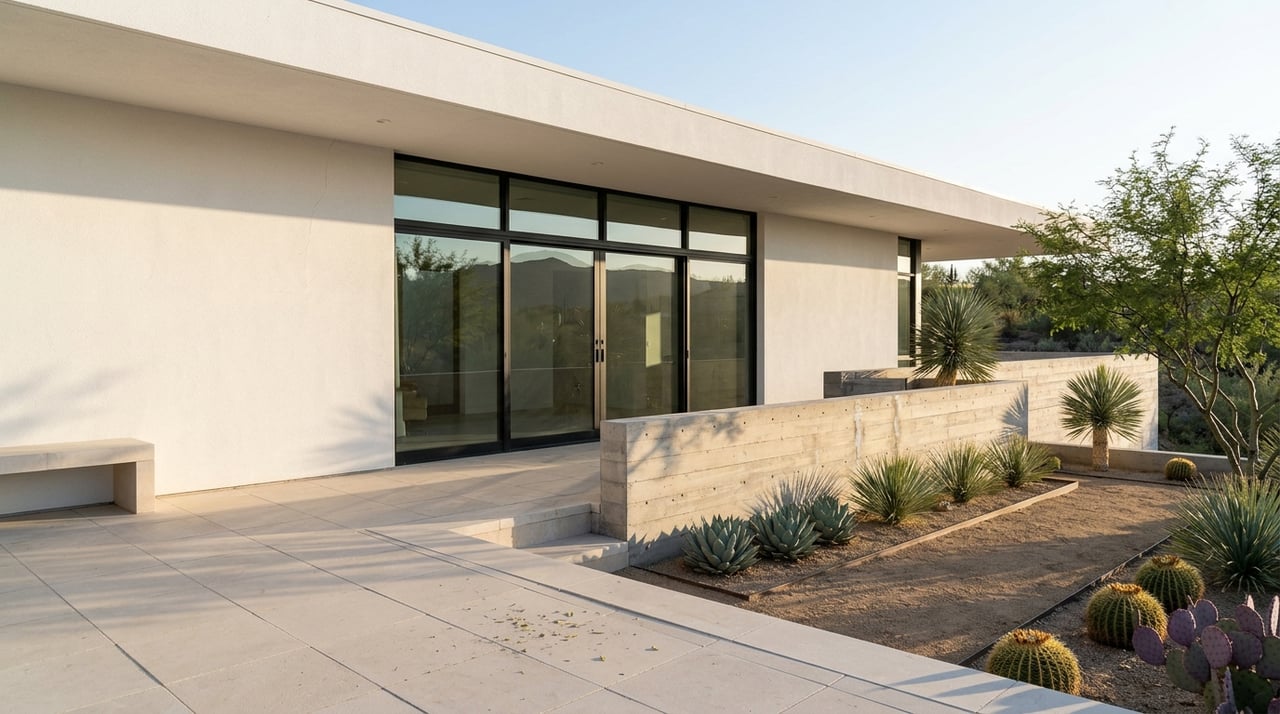
If you are planning a custom home in Desert Palisades, the lot matters just as much as the house. This is not a community where you pick a plan, clear the site, and force the land to cooperate. In Desert Palisades, the strongest homes respond to the slope, the boulders, the views, and the desert light from the very beginning. This guide will help you understand what that means in practical terms so you can make smarter decisions before you buy, design, or build. Let’s dive in.
Why Desert Palisades Feels Different
Desert Palisades sits at the base of the rocky desert mountains on the eastern edge of the Chino Canyon alluvial fan in Palm Springs. The city’s specific plan envisions up to 110 single-family custom home sites, with homes designed to preserve the area’s natural features and feel like light-touch additions to the landscape.
That framework shapes almost every design decision. Rather than encouraging a generic luxury look, the neighborhood is rooted in Palm Springs modernist tradition, with an emphasis on desert modernism and regional vernacular. In simple terms, your home should feel connected to the site and the broader architectural language of Palm Springs.
Start With the Lot First
In Desert Palisades, each parcel calls for a site-specific response. That means your lot choice can affect everything from your foundation strategy to your view corridor, privacy, drainage plan, and outdoor living layout.
Before choosing a homesite or evaluating a spec property, pay close attention to a few key conditions:
- Slope and grade changes
- Boulder placement and natural landforms
- Drainage paths and arroyo relationships
- Solar exposure throughout the day
- Mountain and valley view lines
- How the home may step with the terrain
For hillside projects in Palm Springs, slopes of 10 percent or greater can trigger additional city review. That may include soils and geotechnical studies, visual simulations, underground utilities, low-lighting strategies, and fire-protection measures. If you are considering a more challenging lot, those early evaluations are essential.
Design Freedom Has Real Boundaries
One of the biggest misconceptions about custom building in a design-forward community is that anything goes. In Desert Palisades, the guidelines are intentionally flexible, but they are not open-ended.
The city’s framework leaves room for individual expression, yet it still expects each home to support consistent aesthetic and sustainability goals. Originality is welcome, but only when the design respects the lot, preserves scenic qualities, and fits the desert-modern character of the neighborhood.
What the community is looking for
The plan generally favors:
- Simple, clean massing
- One-story forms that step with the terrain when needed
- Low-slope, horizontal rooflines
- Natural and nonreflective materials
- Limited ornamentation
- Indoor-outdoor living spaces integrated with the main home
That means highly reflective finishes, decorative styling, or bulkier forms may be difficult to justify within the review process.
Key Rules That Shape the Home
Several design standards have an outsized impact on how a custom home comes together in Desert Palisades. If you understand these early, you can avoid costly redesigns later.
Height and massing
Residences are generally limited to one story, although they may step with the terrain. The maximum overall height is 25 feet.
This encourages homes that stay visually grounded and work with the hillside rather than dominate it. In many cases, the most successful designs use long, horizontal lines and carefully placed volumes to make the architecture feel calm and proportional.
Roof design
Low-slope and horizontal roofs are preferred, and overhangs are encouraged to provide shade and reduce solar gain. Roof materials must be nonreflective and appropriate for fire conditions.
The site is in a high fire severity zone, and the plan calls for Class B roof covering or roof assembly. That requirement makes roof design about more than style. It also affects performance and safety.
Materials and exterior expression
The guidelines favor stone, concrete, block, steel, glass, and weathering metal. They discourage shiny metal, veneer masonry, decorative stucco, and similar finishes.
The goal is a home that feels grounded in the desert setting. Materials should support the landscape, not compete with it.
Windows and doors
Large panes of glass, rectangular openings, sliding glass doors, reduced reflectivity, passive solar strategies, and cross ventilation are all encouraged. These choices support views, natural light, and comfort.
In practice, this means glazing should be used thoughtfully. The best solutions tend to frame the landscape while also addressing solar exposure and interior livability.
Views, Privacy, and Lighting Matter
In Desert Palisades, views are part of the design brief. Mountain and valley sight lines should be addressed through building orientation, height adjustments, and view corridors.
The plan also calls for careful placement of walls and trees so neighboring views are preserved. This is one reason lot planning is so important. A home that captures your view while respecting adjacent sight lines is far more likely to fit the community’s intent.
Privacy is expected to come from architecture, native boulders, and natural materials rather than hard perimeter barriers. Perimeter property-line fences are prohibited, and fences are generally discouraged.
Night lighting is another important detail. Exterior lighting should remain minimal to avoid glare in the skyline, which helps preserve the quiet visual character of the hillside setting.
Outdoor Living Should Feel Integrated
Outdoor space is a major part of the lifestyle appeal in Palm Springs, and Desert Palisades supports that. Patios, terraces, and decks are treated as extensions of the interior, not as secondary add-ons.
The plan favors natural, permeable materials for these spaces. Pools are allowed, and infinity edges may work where topography supports them.
The key is integration. Your outdoor rooms should feel tied to the architecture, climate, drainage conditions, and fire-safety needs of the site.
Building With the Terrain, Not Against It
Mass grading is not expected in Desert Palisades, and site work should disturb the land as little as possible. The specific plan encourages site-sensitive foundation systems and even notes modular building systems as a way to reduce waste, dust, and construction time.
That tells you something important about the neighborhood’s priorities. The objective is not to erase the site. It is to design around it in a way that preserves natural form and minimizes disruption.
This is also why drainage and engineering need to be part of the conversation early. Natural drainage channels and pedestrian access to trails and arroyos are encouraged, and edge landscaping should be native and drought tolerant.
Spec Home or Ground-Up Custom?
For many buyers, the real decision is not whether custom design sounds appealing. It is whether a specific lot truly justifies a ground-up process.
A spec home may be the better fit when it already aligns with the community’s standards for views, massing, materials, and outdoor living. If the orientation is strong, the site response is thoughtful, and the design feels native to Desert Palisades, a well-executed spec property can offer a simpler path.
A custom build often makes more sense when the lot has unique topography, solar exposure, view opportunities, or outdoor-living potential that deserves a tailored solution. In this neighborhood, the best custom decisions usually put the lot first and the floor plan second.
Assemble the Right Team Early
A hillside custom home in Desert Palisades usually requires a coordinated group of professionals from the start. Based on the city’s review structure and the site-specific requirements, buyers should expect to work with:
- An architect
- A landscape architect
- A civil engineer
- A geotechnical engineer
- A builder with hillside and fire-zone experience
The HOA design review committee is also required to include at least one licensed architect and one licensed landscape architect. That reinforces how seriously the community takes site-sensitive design.
A successful team here is not only design-forward. It also needs to be analytical about sun angles, prevailing winds, drainage, access, and terrain from day one.
What Tends to Age Well Here
In Desert Palisades, long-term appeal is closely tied to design fit rather than sheer size. Homes that appear to belong to the site often feel more coherent over time, both visually and functionally.
That usually means architecture that preserves scenic terrain, uses restrained materials, respects the natural grade, and creates a strong connection between indoor and outdoor space. In a neighborhood shaped by landscape and views, fit matters.
If you are evaluating a purchase here, it helps to look beyond square footage and finishes. Ask whether the home feels native to the lot, whether the massing is disciplined, and whether the design works with the desert rather than simply sitting on top of it.
For buyers considering Desert Palisades, informed guidance can make the process more efficient and far more enjoyable. If you want a discreet, highly personalized approach to evaluating lots, spec homes, or design-forward opportunities in Palm Springs, connect with LBG Luxury Homes for a private consultation.
FAQs
What design style fits Desert Palisades in Palm Springs?
- Desert Palisades is rooted in desert modernism and regional vernacular, with an emphasis on simple massing, natural materials, low-slope roofs, and homes that respond to the landscape.
What are the height limits for custom homes in Desert Palisades?
- Residences are generally limited to one story, though they may step with the terrain, and the maximum overall height is 25 feet.
Can you add standard perimeter fencing in Desert Palisades?
- No. Perimeter property-line fences are prohibited, and the plan generally prefers privacy through architecture, low walls, planters, and existing site features.
What should buyers evaluate before choosing a Desert Palisades lot?
- You should review slope, boulder placement, drainage, solar exposure, view corridors, and how the home can fit the terrain with minimal site disturbance.
Is a spec home or custom home better for Desert Palisades buyers?
- It depends on the lot and the design. A spec home can work well if it already aligns with the community’s standards, while a custom build may be the better option for a lot that needs a more tailored response.
Who should be on a Desert Palisades custom home team?
- Buyers planning a ground-up home should typically expect to work with an architect, landscape architect, civil engineer, geotechnical engineer, and a builder experienced in hillside and fire-zone construction.