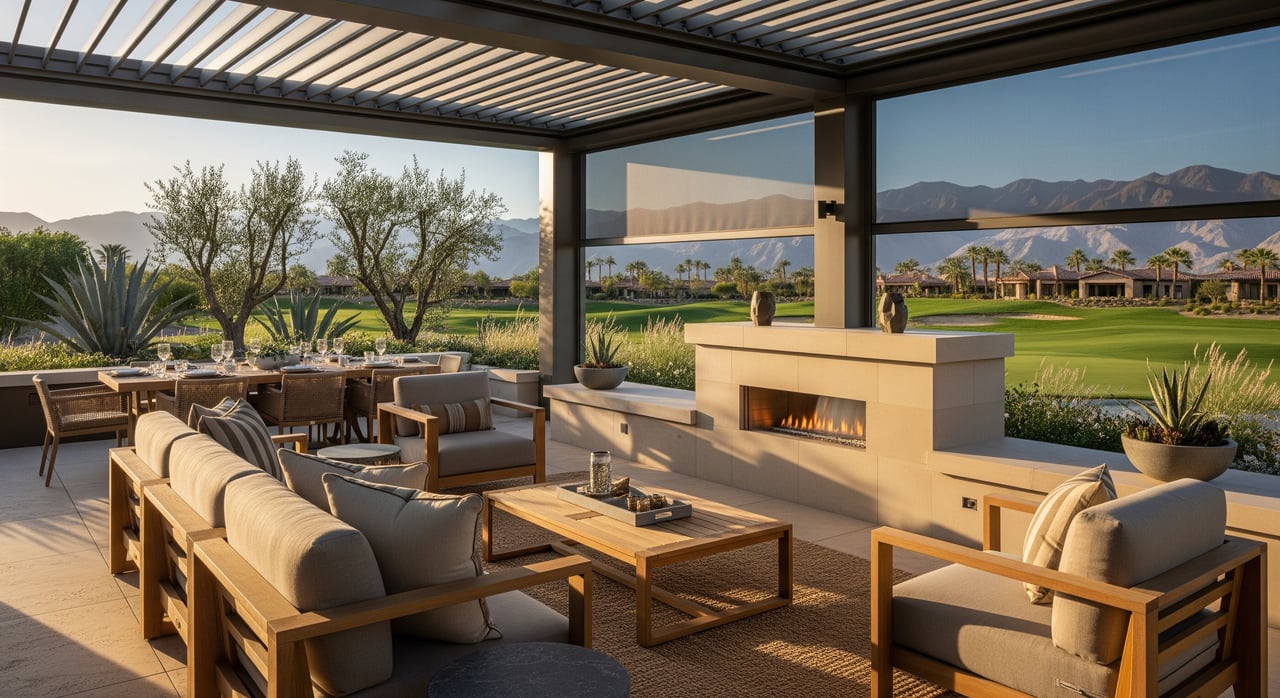
Is your patio beautiful until the wind picks up or the late sun turns it into a hot plate? If you own or are shopping for a home in PGA West and the greater Coachella Valley, you know how much comfort and usability depend on smart outdoor design. You want shade, airflow, and durable features that protect your view and your investment. This guide shows you how to place shade, screens, and fire features so you enjoy the desert lifestyle more days of the year. Let’s dive in.
Know the wind and sun
The Coachella Valley has a hot desert climate with strong sun, low rainfall, and big temperature swings. Daily breezes can cool your patio, while seasonal wind events can create sudden gusts. You should design for both. The National Weather Service tracks local wind patterns and high-wind advisories, and the Western Regional Climate Center provides climate normals that confirm the region’s intense solar exposure.
What this means for your patio:
- Plan for regular afternoon breezes that help ventilation.
- Expect occasional strong gusts, especially in fall and winter, that stress lightweight elements.
- Choose adjustable shading and screens that can stow automatically in wind, and specify materials that handle heat and UV.
Golf-view vs interior lots
Lot type shapes your approach. Golf-view properties focus on view preservation, while interior lots prioritize privacy and wind buffering.
Golf-view lots: protect the view
Your goal is to frame the fairway while staying comfortable. Consider these moves:
- Use a thin, low-profile pergola set back a few feet from the patio edge. This keeps eyelines open from the great room out to the course.
- Favor narrow rooflines, cable or glass guardrails, and slim posts to maintain sightlines.
- Add retractable side screens on the west or southwest exposure to cut glare and heat late in the day. Choose meshes that preserve visibility when lowered.
- Install wind sensors so screens auto-retract during gusts to avoid damage.
Interior lots: build a calm microclimate
Here you can be more assertive with vertical screening and privacy elements.
- Place louvered panels, trellises, or motorized screens on the windward side to calm breezes and reduce dust.
- Use taller planting or architectural walls where allowed to create sheltered seating zones.
- Choose fixed-louver pergolas for consistent shade when views are not the priority.
Shade structures that last
Shade is your number-one comfort tool. Think about both structure and placement.
Fixed vs adjustable shade
- Fixed shade, like solid roof pergolas or tightly spaced louvers, gives reliable coverage. It can feel heavier in shoulder seasons when you want more light.
- Adjustable shade, like louvered roofs or retractable awnings, adapts to sun angle and wind. When wind sensors are included, these systems can stow themselves in gusts.
Smart placement and orientation
- Prioritize the west and southwest sides to block intense late-afternoon sun.
- Keep overhead elements slightly back from the patio edge so the view corridor stays open from inside the home.
- Use low, thin roof profiles near the view to avoid blocking sightlines.
Motorized screens and controls
Motorized screens and roll-down shades can transform your patio from windy to serene in seconds.
- Select products with clear wind ratings. Residential systems vary, so confirm the manufacturer’s data and size your spans accordingly.
- Include wind sensors that trigger automatic retraction at preset gust thresholds. Battery backup or manual override is wise.
- Choose UV-stable meshes, such as PVC-coated fiberglass or HDPE, and match the open-area percentage to your goals. Lower openness improves sun control and privacy, higher openness preserves the view.
- Install motors and housings in weather-resistant enclosures and use outdoor-rated electrical with GFCI protection.
Fire features with less smoke
Fire features add evening ambiance, but placement matters on breezy nights.
- Place fire pits or fireplaces downwind of seating when possible so smoke is carried away. Avoid tight corners that can funnel smoke back toward people.
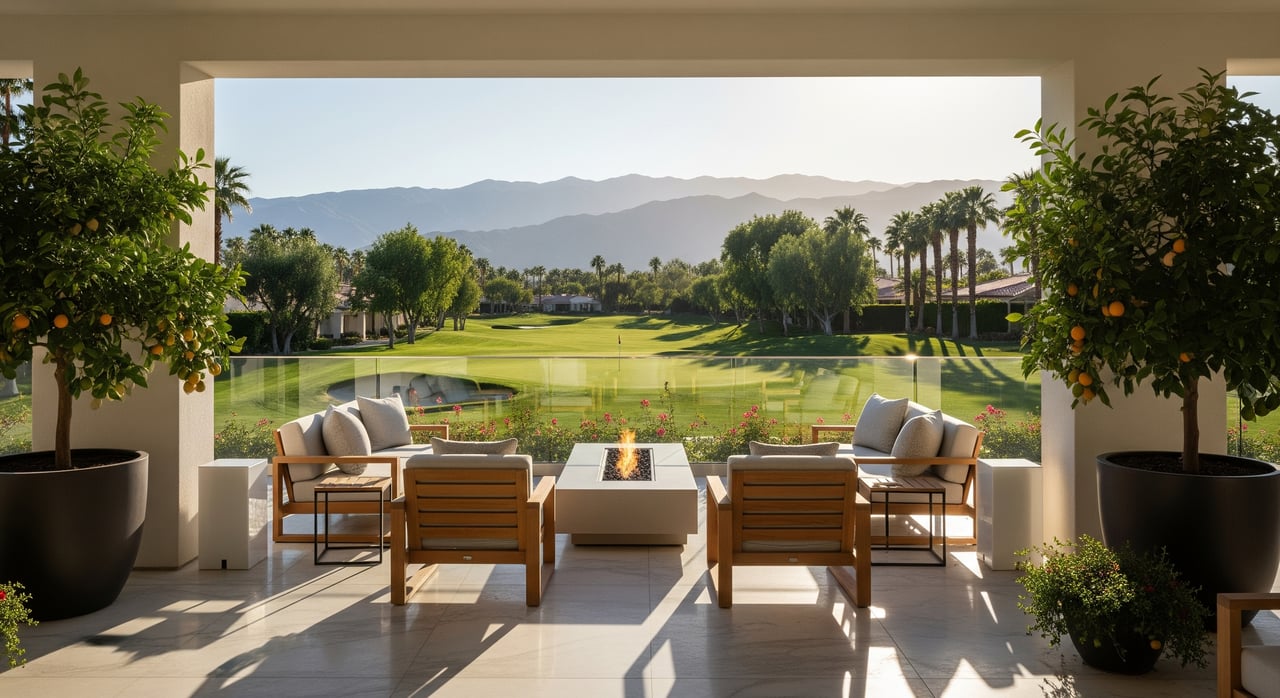
- Keep sightlines low with linear burners or sunken fire tables on golf-view lots.
- Consider gas over wood. Gas burns cleaner, and regional air quality rules may limit wood-burning appliances. Review guidance from the South Coast Air Quality Management District and safety standards from the National Fire Protection Association.
- Use stainless steel burners with sealed controls and follow all clearance requirements in the manufacturer’s instructions.
Materials for desert durability
Heat, UV, and sand are tough on outdoor finishes. Choose materials that last.
- Structure: Powder-coated aluminum and stainless steel hardware are strong, corrosion resistant, and low maintenance. If you prefer wood, expect more upkeep in desert sun.
- Fasteners: Use stainless steel or corrosion-resistant anchors sized for wind loads. Avoid basic galvanized fasteners that can degrade in high UV.
- Fabrics and screens: Specify UV-stable, solution-dyed acrylics or coated polyesters for shade. Select screen meshes rated for solar exposure with the right openness for your needs.
- Hardscape: Porcelain pavers, natural stone, or concrete pavers with slip resistance manage heat better than many composites. Lighter tones reduce surface temperatures.
HOA, permits, and safety
Most communities in the Coachella Valley have HOA design review and view policies. PGA West and similar communities often regulate height, profiles, colors, and placement of structures. Do not assume something is permitted because you have seen it nearby.
- Read your HOA CC&Rs and Design Review Guidelines early. Submit sketches and sightline studies before ordering custom elements.
- For permits, confirm requirements for pergolas, anchored shades, gas lines, and fireplaces with your jurisdiction. Start with the City of La Quinta for PGA West addresses and the City of Palm Desert for nearby neighborhoods.
- Follow building and fire codes. The International Code Council publishes IBC/IRC/IFC references used by local departments. Always install per manufacturer specs and local code.
Step-by-step plan
Use this checklist to design a wind-smart patio with fewer surprises.
- Site assessment
- Map your lot orientation, sun path, and wind exposure. Note any wind corridors along fairways or near mountains.
- Identify view priorities and neighbors’ sightlines. Flag hot surfaces and glare from nearby hardscape.
- Regulatory check
- Collect HOA rules and design submittal requirements. Note review timelines and neighbor notification steps if required.
- Call the city or county to confirm permit thresholds for structures, shades, gas, and electrical. Ask the fire department about appliance clearances.
- Review air quality guidance on open burning and appliance rules through the South Coast Air Quality Management District.
- Design decisions
- Choose your shade strategy: fixed, adjustable, or a mix.
- Specify motorized screens with wind ratings and auto-retraction sensors.
- Select a gas fire feature when possible and keep profiles low on view lots.
- Structural details
- Use powder-coated aluminum frames, stainless fasteners, and UV-stable fabrics.
- Confirm anchorage and spans for local wind loads. Engineer permanent roofed elements as needed.
- Plan for protected motor housings, GFCI outlets, and safe gas shutoffs.
- Contractor and approvals
- Hire licensed contractors for structural, gas, and electrical work.
- Secure HOA approval and building permits before fabrication.
- Schedule final inspections and commission motorized systems.
Maintenance checklist
Desert weather accelerates wear. A seasonal tune-up keeps systems reliable.
- Inspect anchors, bolts, and brackets twice a year. Tighten or replace as needed.
- Check screen and fabric tension. Look for fraying, fading, or UV damage.
- Test wind and sun sensors at the start of windy seasons.
- Clean fabrics and screens per manufacturer instructions. Remove dust and sand that can abrade fibers.
A real estate perspective
Thoughtful outdoor living is a lifestyle asset in the Coachella Valley. Buyers appreciate patios that handle wind and sun while preserving fairway views. If you are preparing to list, simple upgrades like auto-retract screens, a low-profile gas fire feature, and a thin, set-back pergola can help your space feel refined and usable. If you are buying, evaluate how each home’s orientation, HOA rules, and existing shade will affect comfort through the seasons.
Ready to align your next move with the outdoor lifestyle you want? Request a Private Consultation with Unknown Company to explore homes and communities where wind-smart design and great views go hand in hand.
FAQs
What is the best shade orientation for PGA West patios?
- Prioritize shading the west and southwest exposures to block late-afternoon sun while keeping overhead elements set back to preserve golf-course views.
Will motorized screens survive Coachella Valley wind events?
- Choose systems with clear wind ratings and pair them with automatic wind sensors so the screens retract during gusts. Plan to stow them before forecasted wind events.
Where should I place a fire pit to reduce smoke issues?
- Position fire features downwind of seating and away from tight corners. Gas burners reduce smoke and often align better with regional air quality guidance.
Do pergolas and shades need permits in La Quinta?
- Many permanent structures and anchored shades require permits. Check with the City of La Quinta or your local jurisdiction before building, and secure HOA approval.
Which materials hold up best in desert conditions?
- Powder-coated aluminum frames, stainless steel hardware, UV-stable fabrics, and porcelain or natural stone pavers deliver durability in heat, UV, and wind-driven sand.